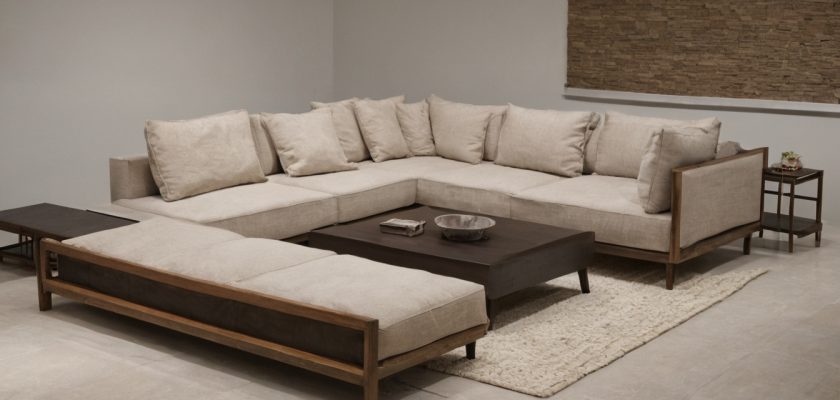
Why does a large living room still feel uncomfortable after the biggest sofa arrives? In many villas, the problem is not furniture quantity; it is a plan that ignored routes, sightlines, conversation distance, and daily habits before ordering.
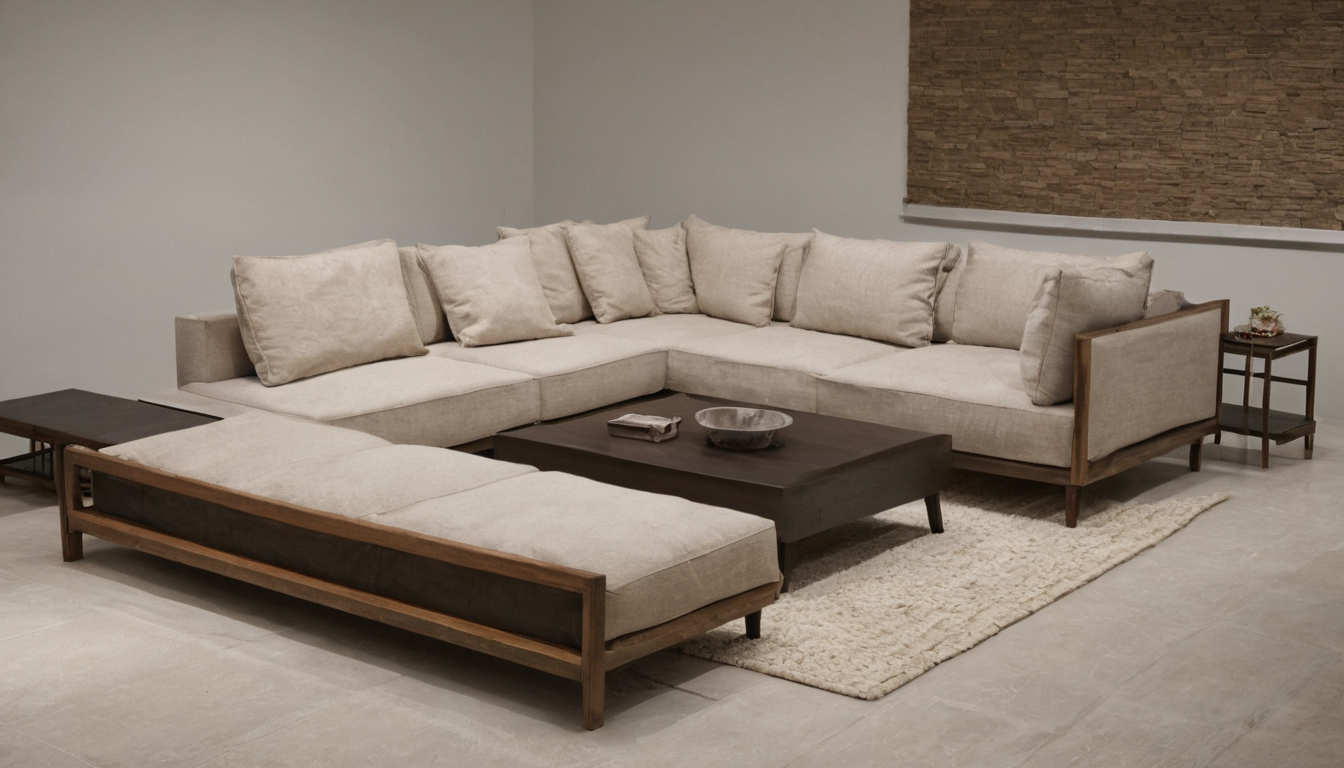
Living Room Furniture Planning for Large Villas: Conversation, Views, and Circulation shown as a planning reference for layout, scale, and material decisions.
A large villa living room should be planned from routes and use cases before furniture style
A large villa living room works best when planning starts with movement and use, not the most impressive showroom piece. High ceilings, garden glazing, TV walls, stair approaches, dining links, and service doors all compete for the same floor area.
The large villa living room needs a route map before a furniture layout
Before selecting furniture, draw a scaled plan and mark the entry-to-terrace route, dining-to-sofa route, stair-to-salon route, garden door route, corridor route, and service route. Empty floor area can mislead because a central seating island may look balanced while blocking daily movement.
- Risk: a central sofa blocks the shortest route from the entrance to the terrace.
- Risk: a console behind the sofa narrows the dining-to-seating path during hosting.
- Risk: occasional chairs interrupt the stair-to-salon desire line.
- Risk: stone floors, glass, and limited textiles make a grand room sound hard. If acoustic products are compared later, ASTM C423-23 is the standard test method for measuring sound absorption coefficients in a reverberation room.
The living room furniture brief should separate family use from formal entertaining
The brief should separate daily lounging from formal hosting. A family lounge may need deeper seats, washable fabrics, a calmer TV angle, and movable tables. A formal salon may need upright chairs, paired sofas, and clear serving access. For a hosting-led reference, see formal villa entertaining furniture.
Conversation zones in a large villa living room work when seat spacing is deliberately controlled
Conversation fails when sofas and chairs are pushed to the walls and separated by decorative emptiness. Pull seating into human-scale groups, keep faces within comfortable speaking distance, and support each seat with a reachable surface.
A large living room may need two seating groups instead of one oversized group
If the main seating group makes people speak across more than about 10 to 12 ft, the room may need two zones. Face-to-face seating often works around 6 to 10 ft. Two zones can combine a formal conversation group with a TV lounge, window chairs, or a fireplace group without stealing the main route.
Living room furnishing ideas should include movable chairs and side tables
Movable pieces handle changing guest counts. Occasional chairs, swivel chairs, stools, and nesting tables can adapt without rebuilding the room. The coffee table should usually sit about 16 to 20 in from the sofa seat edge, with side tables near lounge chairs. Where flexible lamps support these zones, ENERGY STAR says qualified LED lighting uses at least 75 percent less energy and lasts up to 25 times longer than incandescent lighting.
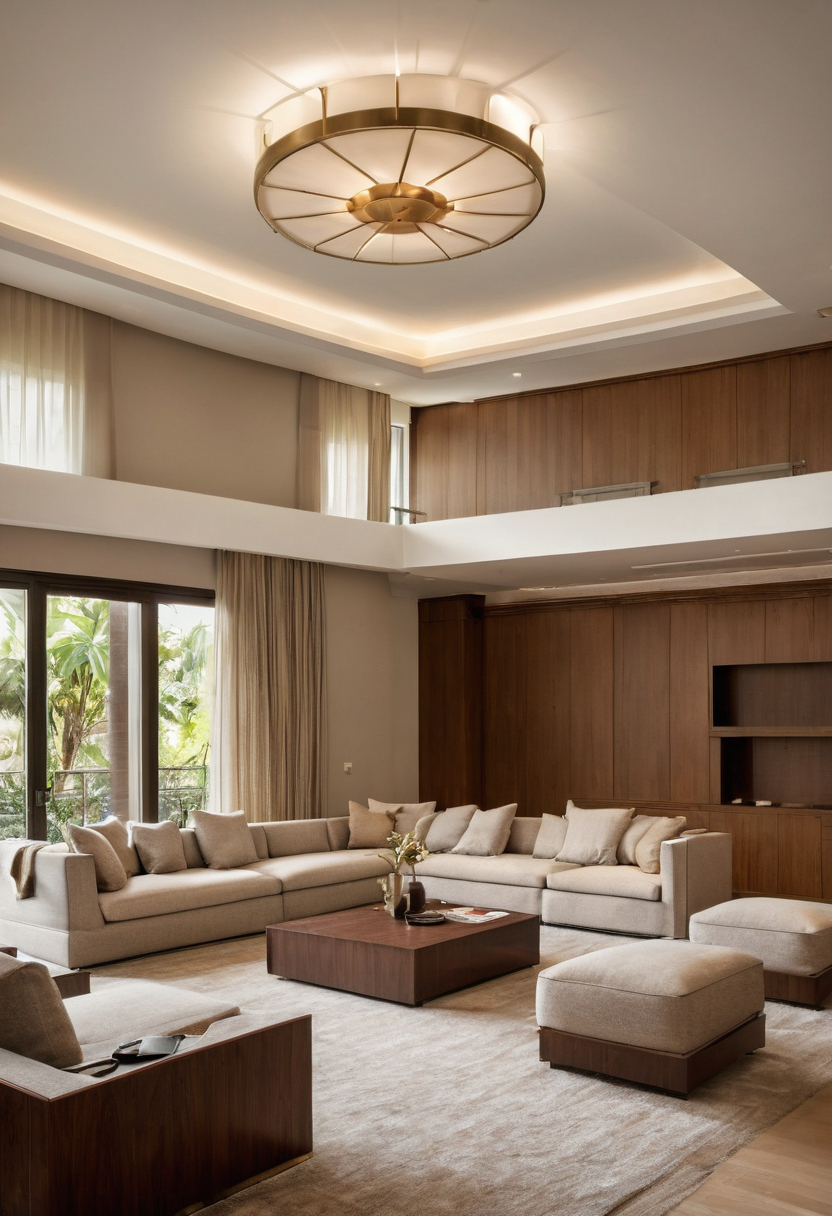
Conversation zones in a large villa living room work when seat spacing is deliberately controlled shown as a planning reference for layout, scale, and material decisions.
Oversized sectionals should be tested against conversation distance, not just room size
Large sectionals can work when their shape supports the room’s social geometry. L-shaped sectionals may isolate one side, U-shaped sectionals can trap circulation, and double chaises may reduce usable seats. Test depths, chaise lengths, and walking space before ordering. Where people pass around seating, allow about 30 to 36 in where possible.
Circulation in a villa salon needs primary routes, secondary routes, and service access
Circulation should be planned as clear lanes around furniture, not leftover space after furnishing. The main path must handle daily movement, guests, and service, while secondary paths should let people sit, stand, and leave without disturbing the group.
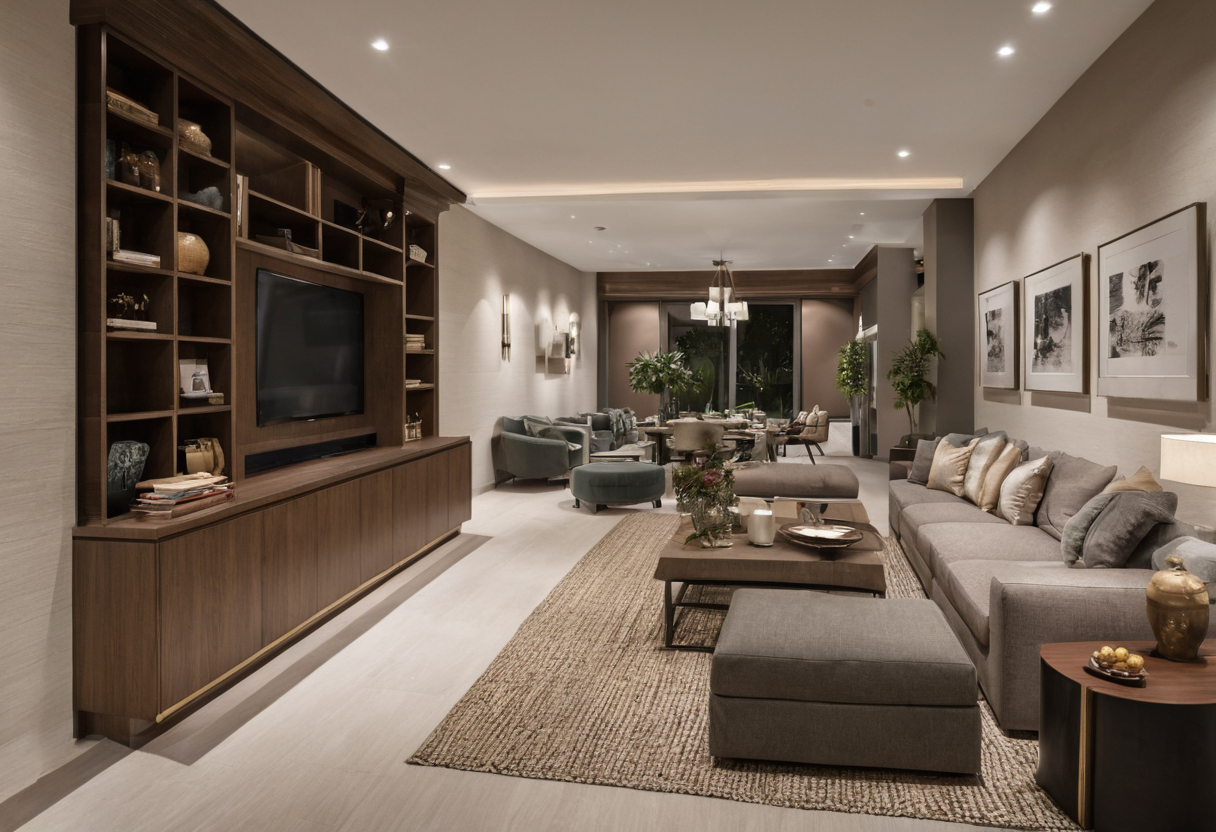
Circulation in a villa salon needs primary routes, secondary routes, and service access shown as a planning reference for layout, scale, and material decisions.
The living room circulation table should separate main paths from furniture access
- Main route: keep about 36 to 48 in clear from entry to terrace, dining room, stair, or garden doors.
- Secondary route: allow about 30 to 36 in beside chairs and between zones.
- Sofa to coffee table: plan about 16 to 20 in for reach without trapping knees.
- Behind-sofa passage: use about 36 in if people must walk behind the sofa.
- Door swing: keep lamps, chairs, and side tables outside the full swing arc.
Pass-through living rooms should keep furniture islands out of the desire line
Pass-through salons fail when a seating island sits directly between the front hall and terrace, or between dining and the main sofa. Offset the group to one side, then use the rug, lamps, and side tables to make the zone feel deliberate. If the salon includes valuable art or collections, the National Park Service Museum Handbook is a conservative reference for preservation, documentation, access, and use.
Views, TV, and fireplace walls should be ranked before the sofa is ordered
A large villa living room often has too many focal points: garden glazing, a television wall, a fireplace, artwork, and a formal entrance axis. Rank these priorities before ordering because the best conversation plan may not be the best media plan.
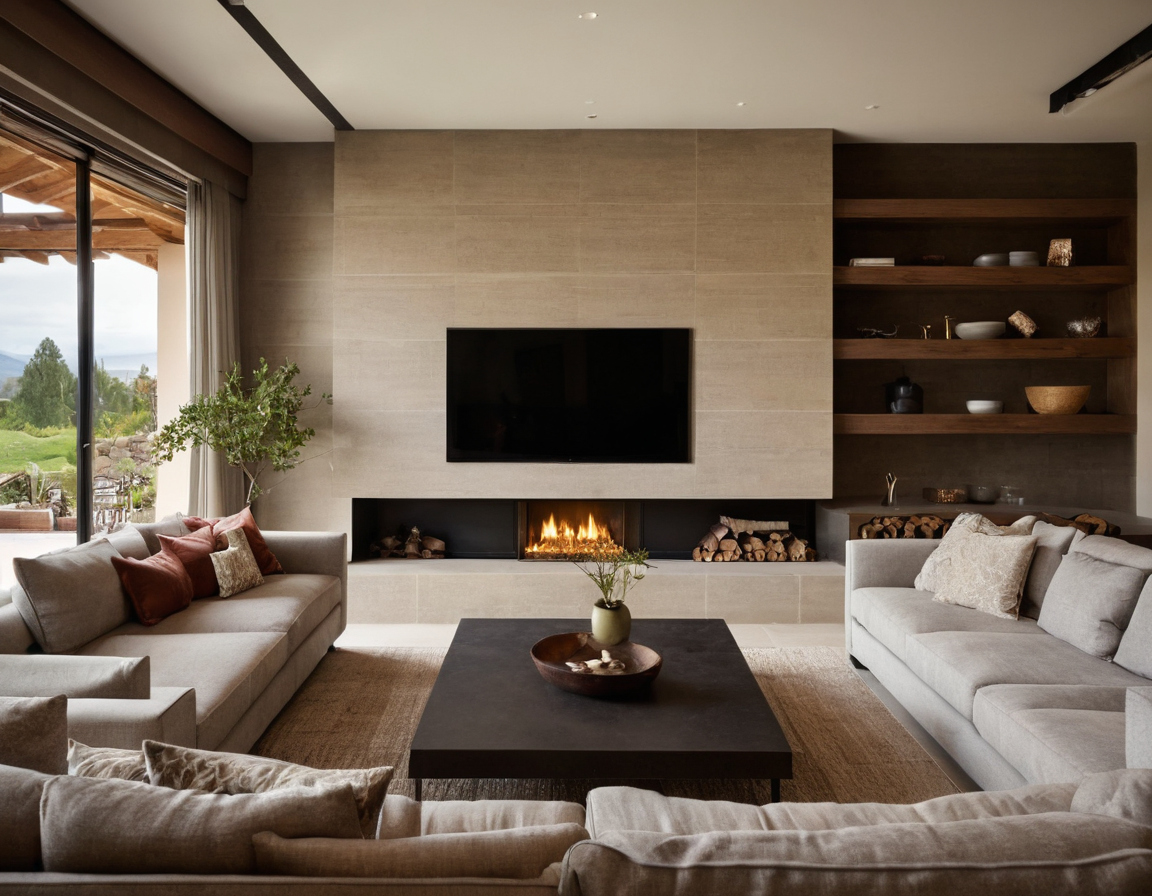
Views, TV, and fireplace walls should be ranked before the sofa is ordered shown with finish, fixture, and clearance relationships visible.
A view-facing living room layout should avoid making the window a furniture dead end
A view-facing layout should acknowledge the garden, skyline, or pool terrace without blocking access. Full-height glazing usually needs a clear walking band for curtains, sliding doors, and terrace use. Low-back sofas, swivel lounge chairs, and upholstered benches can hold the view edge without becoming a visual wall.
A TV-facing living room layout should not force every seat into cinema mode
A TV-facing plan should define a good viewing zone, not convert the salon into a theater. For many modern large screens, casual seating often feels comfortable at roughly 1 to 1.5 times the screen diagonal, while farther seats can remain useful for background viewing.
A fireplace or art wall should be treated as one focal point, not the only plan driver
A fireplace wall deserves respect, but clearances must come from the specific fireplace manufacturer, fuel type, local code, and installer. Symmetry around a hearth can still block the terrace route or make TV viewing awkward. For natural stone near hearths, ledges, or floor borders, the Natural Stone Institute warns that scouring powders or creams can scratch stone surfaces because those products contain abrasives.
Rugs, lighting, and acoustics make large living room furniture zones feel intentional
Rugs, lighting, and acoustic surfaces are not final decoration in a large villa living room; they make separate furniture groups feel planned. Hard rooms with stone floors, glass walls, and high ceilings need scale, softness, and layered light.
A large living room rug should connect the seating group rather than float under the coffee table
A large rug should hold the furniture island together. For a primary group, specify either an all-legs-on rug or a front-legs-on rug with enough border beyond sofas and chairs to look intentional. Common large sizes include 10 by 14 ft and 12 by 15 ft, but villa salons often need custom rugs.
Layered lighting should follow furniture zones, not only the ceiling grid
Lighting should be drawn over the furniture plan. Ambient light can come from coves, pendants, or controlled downlights; task light belongs beside reading chairs and sofas; accent light can wash art, stone, bookcases, or textured walls. Coordinate floor sockets, side-table outlets, dimming, and scene controls before rugs and sofas lock the layout.
Acoustic comfort should be specified when the villa living room has hard finishes
Acoustic comfort improves when the room gains absorbent and irregular surfaces: thick rugs, lined curtains, upholstered seating, fabric wall panels, filled bookcases, and textile art. Upholstery should also match family use; the Association for Contract Textiles performance guidelines include abrasion resistance as one performance measure for upholstery fabrics.
The furniture procurement sequence should verify dimensions before the villa living room is furnished
The safest procurement sequence is measure, zone, tape, sample, order, deliver, and adjust. This prevents expensive sofas, rugs, consoles, and tables from arriving before circulation, lift access, doorway clearance, upholstery performance, and electrical positions have been checked.
A taped furniture plan should be tested before ordering large sofas and rugs
A taped plan turns abstract home furnishing considerations into a site test. Mark the sofa, lounge chairs, coffee table, rug edge, console, lamps, and floor boxes with painter’s tape at full size. Walk the main routes, sit in each proposed seat, and test view angles, conversation distance, table reach, and outlets.
Delivery access can decide whether luxury furniture fits the villa at all
Delivery measurements should include gate width, lift cabin, stair turns, corridor width, door height, ceiling drops, handrails, chandeliers, and the final room approach. Long consoles, stone tables, oversized mirrors, custom rugs, and one-piece sectionals may need modular construction, removable legs, crating plans, or on-site assembly.
The final living room decor ideas should be edited after the furniture plan is functional
Fabric approval belongs in procurement, not after installation. Supplier test results should guide final approval. Cushions, trays, books, plants, and art should edit the room, not rescue a poor plan.
FAQ
How do you arrange furniture in a very large living room without creating dead zones?
Start with routes, then create two or more human-scale seating groups if one group becomes too wide. Anchor each zone with a rug, tables, lighting, and clear access.
What is the 2/3 rule for furniture, and does it work in a large villa living room?
The 2/3 rule is a proportion guide, often used to size a sofa against a wall or a coffee table against a sofa. It should not override circulation, conversation distance, or delivery access.
What is the 60-30-10 rule for living rooms, and should it guide furniture planning or only color?
The 60-30-10 rule is mainly a color distribution guide: dominant color, secondary color, and accent color. Use it after the furniture plan works.
What is the 3-5-7 rule in interior design, and is it useful for living room decor ideas?
The 3-5-7 rule helps group decorative objects in odd numbers. It is useful for accessories, but it cannot fix blocked routes or poor seating geometry.
Should a large living room layout face the TV, the window view, or the fireplace?
Rank focal points by daily use. Often, the best plan gives the primary group strong conversation, lets selected seats face the TV, and keeps the view or fireplace visible.

