
“Full service” does not identify a standard package. Before comparing interior design fees, identify who approves drawings, orders furniture, insures deliveries, checks installation and corrects defects. A vague answer can leave a damaged stone slab, a closed ceiling or an unpaid warranty claim between several parties, with none contractually responsible.
Which interior design services does a luxury home actually require?
Luxury homeowners should select interior design services according to project complexity, not property value. Decoration may suit a completed home, while renovation or new construction usually needs technical design, consultant coordination, procurement and defined site duties.

Which interior design services does a luxury home actually require shown with finish, fixture, and clearance relationships visible.
| Service model | Typical deliverables | Main risk to clarify |
|---|---|---|
| Full-service interior design | Concepts, technical drawings, schedules, purchasing, installation and handover | Architecture, engineering and continuous site control may remain excluded |
| Decoration only | Furniture plans, textiles, decorative finishes and styling | Not suitable for regulated building changes |
| Design consultancy | Reviews, workshops, specifications and design direction | The homeowner coordinates implementation |
| Architectural interior coordination | Partitions, ceilings, fixed joinery and building-system interfaces | Licensed consultants may still need to certify the work |
| Procurement | Quotations, orders, delivery records and installation scheduling | Damage, storage, returns and warranties need named owners |
| Site supervision | Visits, reports, clarifications and snagging | Periodic attendance is not continuous quality control |
Full-service interior design covers design, documentation, purchasing, and installation only when the appointment says so
A dependable appointment separates concept design, design development, technical documentation, procurement, installation and handover. Each stage should end with written approval before the studio releases drawings, places orders or advances into work that is expensive to reverse.
A scope may include layouts, material palettes, lighting concepts, joinery details, finish schedules, furniture specifications and living-room furniture planning for large villas. Common exclusions include structural engineering, building-services engineering, authority submissions, acoustic design, security systems and permanent site management.
- Confirm who prepares, reviews and approves every drawing.
- Confirm whether procurement includes freight, storage, insurance and installation.
- Confirm who records defects and pursues corrective work.
- Confirm whether site visits are scheduled, capped or charged separately.
Formal appointments show why labels are insufficient. The RIBA Standard Professional Services Contract 2020 with its 2024 Amendment sets out roles, associated services and contract terms for specified complex commissions, while RIBA identifies a separate domestic contract for home projects. The amended standard contract also reflects the Building Safety Act, Part 2A of the Building Regulations and the revised RIBA Plan of Work. Applicable duties still depend on the project and jurisdiction.
Decoration-only services suit homes that do not need regulated construction decisions
Decoration-only work suits a sound, completed interior where the brief concerns movable furniture, rugs, curtains, artwork and decorative surfaces. The U.S. Environmental Protection Agency identifies paints, varnishes, building materials and furnishings as potential indoor sources of volatile organic compounds, so finish schedules should address ventilation and installation sequencing.
A decorator should not accept responsibility for structural changes, fire-safety design, plumbing alterations or regulated electrical work unless local law permits the service and the practitioner holds the required qualification. ENERGY STAR reports that qualified LED lighting uses at least 75 percent less energy and lasts up to 25 times longer than incandescent lighting, but selecting lamps is different from redesigning circuits or ceiling infrastructure.
The next decision is not which professional title sounds broader. It is who holds responsibility for architecture, engineering and each interior interface.
Who is responsible for architecture, engineering, and interior coordination?
An interior designer is not automatically the lead architect, engineer or approvals coordinator. The appointment must identify who owns each drawing, checks interfaces, submits regulated work and resolves conflicts.
A luxury-home responsibility matrix should assign every drawing, approval, and interface
Request a matrix that names who prepares, reviews, approves, installs, inspects and signs off each work package.
- Homeowner: approves the brief, budget, finishes, variations and purchases.
- Interior designer: coordinates layouts, ceiling plans, finishes, joinery intent and contracted interfaces.
- Architect: controls architectural drawings, code coordination and submissions within the appointment.
- Engineers: design and certify structure, power, drainage, ventilation and cooling within their disciplines.
- Specialists: coordinate lighting controls, smart-home equipment and fabrication details.
- Contractor: verifies dimensions, produces shop drawings, installs approved work and reports conflicts before concealment.
- Quantity surveyor: tracks cost plans, tenders, variations and payment assessments when appointed.
Coordination reaches tangible details: ceiling recesses must align with air-conditioning grilles, sockets must fit inside joinery and stone thicknesses must appear in thresholds. The Natural Stone Institute recommends neutral cleaners, stone soap or mild detergent with warm water and warns that abrasive powders or creams can scratch natural stone. The specification must therefore connect appearance, installation and future care.
Architectural coordination must be separated from authority approval and engineering certification
Design coordination checks whether consultants’ information fits together. Regulatory approval obtains authority consent. Engineering certification assigns discipline-specific responsibility to a suitably licensed professional. Contractor coordination covers fabrication, sequencing, access, installation and site safety. One duty does not automatically include the others.

Who is responsible for architecture, engineering, and interior coordination shown with floor, wall, and fixture relationships visible.
Confirm who may approve or certify altered structure, waterproofing, drainage, ventilation, fire provisions and electrical work. Bathroom duties need explicit allocation because the U.S. Environmental Protection Agency advises correcting condensation and damp spots promptly to prevent mold growth.
Once every responsibility has an owner, proposals can be compared by what each fee actually covers.
How should luxury homeowners compare interior design fees?
Interior design fees become comparable only after every proposal uses the same scope, programme, purchasing assumptions, revision limits, currency, tax treatment and site attendance.
Fixed, hourly, area-based, and percentage fees transfer different risks
A fixed fee provides certainty while the brief, schedule and approval process remain stable. Hourly billing suits uncertain advisory work but transfers time risk to the homeowner. Area-based fees provide an early allowance, although bespoke joinery, lighting, art and specialist finishes can make two equal-sized rooms require very different workloads.
Percentage fees depend on a defined cost base. The appointment should state whether that base includes construction, furniture, specialist packages, taxes and variations. The RIBA Standard Professional Services Contract illustrates why calculation dates matter: under its stated conditions, a client-directed reduction does not simply rewrite percentage fees already earned against the earlier cost estimate or tender.
A comparable interior design services price list must expose exclusions
| Cost heading | Confirm in writing |
|---|---|
| Professional services | Stages, drawings, renders, revisions, meetings and visits |
| Expenses | Travel, samples, couriers, printing and accommodation |
| Third parties | Surveys, engineers, authorities and specialist consultants |
| Completion | Storage, installation, styling, snagging and handover |
| Commercial basis | Currency, tax, validity period and rate adjustments |
A private gallery also needs preservation, access and documentation duties rather than a generic styling allowance. The National Park Service Museum Handbook provides a conservative reference for collections preservation, documentation, access and use.
Luxury interior design cost should be tested against service hours and project risk
Test each fee against the proposed team and workload: principal design direction, technical drawing hours, procurement administration, site observation and handover support. Renovation complexity, bespoke content, location, approval burden and programme compression all affect those hours.
Treat cost per room or square metre as a budgeting allowance, not a binding quotation. Procurement then needs separate examination because trade pricing, freight and warranty exposure can outweigh the apparent difference between design fees.
How do procurement fees, trade pricing, and furniture budgets work?
Procurement is a separate commercial responsibility even inside a full-service package. The appointment must identify who purchases each item, how compensation works and who carries cancellation, freight, storage, damage and warranty exposure.
Procurement compensation should be disclosed separately from product and logistics costs
A trade discount is the difference between retail and trade prices. A markup is added to the designer’s net cost, while margin expresses profit as a share of the selling price. A purchasing fee charges separately for ordering work, a commission comes from the supplier and agency purchasing means the designer orders on the homeowner’s behalf.
Trade access does not guarantee the lowest installed cost. Compare product prices, disclosed compensation, freight, duty, tax, receiving, storage and installation in one ledger. The ASID contracts resource describes customizable residential contract packages intended to mitigate business risk, although its public page does not specify the clauses or jurisdiction. Local contract, consumer and tax rules require separate review.
| Hypothetical ledger item | Budget allowance |
|---|---|
| Furniture at disclosed net price | 100,000 currency units |
| Procurement fee | 15,000 |
| Freight and duty | 13,000 |
| Receiving and storage | 3,000 |
| Installation | 7,000 |
| Contingency | 5,000 |
| Total before applicable tax | 143,000 |
The purchasing party controls refunds, warranties, claims, and delivery records
The seller of record issues the sales invoice, while an agent may place orders under delegated authority. The appointment should assign order approvals, deposits, balances, transit insurance, warehouse cover, delivery inspections, damage notices, returns and warranty claims.
Every substitution, price increase or lead-time change needs written approval before ordering. Delivery records should connect each purchase order to photographs, inspection notes and claim deadlines. For furnishing a villa for formal entertaining, the ledger should also separate room allocations and phased delivery dates.
Bespoke furniture requires signed specifications before deposits are released
A bespoke approval sheet should record overall dimensions, access dimensions, finish samples, fabric direction, electrical requirements, shop drawings, lead time, deposit, cancellation terms, warranty and remake conditions. Supplier terms should be attached because made-to-order goods may restrict cancellation after production approval.
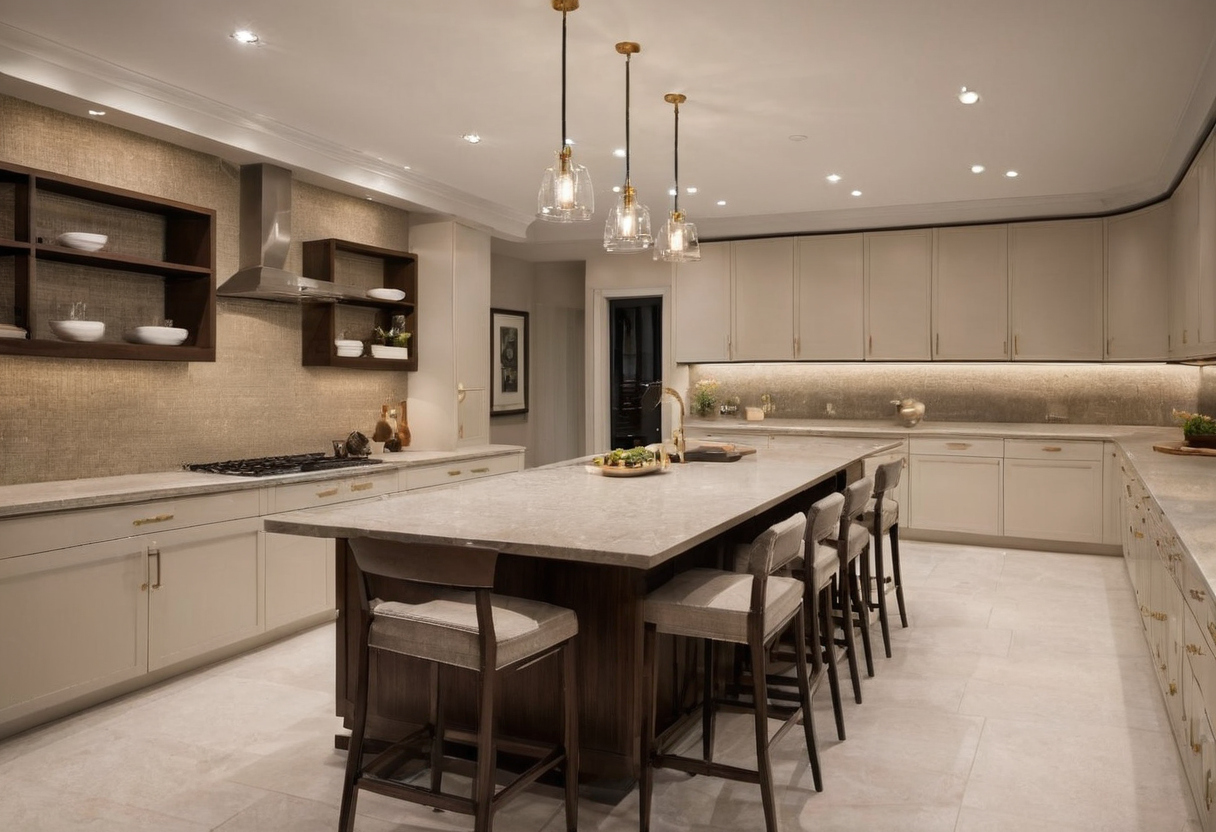
How do procurement fees, trade pricing, and furniture budgets work shown with finish, fixture, and clearance relationships visible.
Doorway checks and finish control become critical when coordinating Italian furniture with contemporary Arabian interiors. Installation plans should also provide ventilation for products that emit volatile organic compounds, consistent with EPA guidance.
Clear purchasing records establish financial responsibility. Site records must then establish who controls installation quality.
What does site supervision include, and who controls construction quality?
Site supervision does not automatically mean continuous inspection or responsibility for workmanship. The appointment must define visit frequency, reporting, authority, safety duties, defect procedures and charges for extra attendance.
Periodic site visits provide design oversight but not permanent quality control
A visit can identify incorrect stone alignment or a lighting conflict before the ceiling closes, but it cannot cover work concealed between visits. The contractor normally retains responsibility for measurements, methods, workmanship, testing and site safety. The designer should record nonconforming work through dated reports, photographs and a request-for-information log.
Site authority must define who can approve changes and instruct the contractor
Site observation, contract administration, project management and continuous inspection are different services. The appointment should identify who reviews submittals, issues instructions and approves cost or programme changes. Each change order should record the revised design, price, completion effect and authorized signatory.
Handover requires snagging, document collection, and a defined defects process
Handover should include a snag list, defect closeout record, warranties, care manuals, finish schedules, test certificates, keys, spare materials and asset records. The contract must allocate furniture damage, installation faults and construction defects. The RIBA amended standard contract also requires disclosure of relevant professional-indemnity restrictions and an internal complaints contact under its stated conditions.

What does site supervision include, and who controls construction quality shown with floor, wall, and fixture relationships visible.
The final proposal check is whether these duties appear in the appointment before anyone signs.
What should homeowners request before appointing an interior designer near them?
Homeowners comparing interior designers near them should issue every candidate with the same brief, responsibility matrix, fee template, programme, procurement terms and site assumptions.
A proposal brief should make interior design services directly comparable
| Request | Required information |
|---|---|
| Project brief | Location, rooms, renovation status, consultants, programme and separate budgets |
| Deliverables | Drawings, specifications, schedules, revisions, approval dates and file formats |
| Service plan | Meetings, procurement, visits, installation, snagging, handover and exclusions |
| Due diligence | Registration, applicable licences, insurance, references and proposed team |
Portfolio interviews should establish who authored the design, produced technical drawings, managed purchasing and inspected installation. References should explain how the studio reported budgets, handled damaged goods, answered site queries and closed defects.
An interior decorator near me and a house designer near me may offer materially different legal scopes
Business labels do not establish legal authority. Verify protected-title and licensing rules with the local regulator, especially for structural work, fire provisions, major building-services alterations and authority submissions.
The signed appointment should resolve ownership, termination, delays, and disputes
The appointment should define payment, use of drawings, access to project records after termination, suspension, liability, delays, governing law and dispute procedures. For traditional procurement, the RIBA Standard Professional Services Contract can apply where tendering occurs at the end of Stage 4, Technical Design. Its 2024 Amendment also includes guidance on signing, witnessing, mediation, adjudication, arbitration and litigation, plus a revised clause for transferring a consultant to a contractor in applicable design-and-build projects.
RIBA lists digital and paper contract documents from £55 plus VAT, with a £10 member discount. Those figures are document purchase prices, not interior design service fees.
Compare responsibility and financial exposure before headline fees. The suitable appointment leaves no essential drawing, damaged delivery, site change or unresolved defect without a named owner.
Frequently asked questions
How much do interior designers charge for procurement, and is the fee separate from furniture prices?
Procurement may be charged through a disclosed markup, purchasing fee, supplier commission, hourly rate or hybrid structure. Request a ledger that separates product cost, designer compensation, freight, duty, tax, receiving, storage and installation.
How do luxury interior designers charge for a whole house?
Whole-house services may use fixed, hourly, area-based, percentage or retainer fees. Compare methods only after normalizing the scope, stages, revisions, consultants, procurement duties, site attendance, currency and taxes.
Does a full-service interior design fee include furniture, freight, storage, and installation?
Not automatically. “Full service” describes no dependable commercial boundary. The proposal and appointment must identify which product, logistics and installation costs are included, excluded or charged separately.
What is the difference between an interior designer near me and an interior decorator near me?
An interior decorator commonly focuses on furniture, textiles, colour and styling. An interior designer may also provide spatial planning and technical documentation, but titles, qualifications and permitted duties vary by jurisdiction. Verify local rules rather than relying on the business label.
How many site visits should a luxury-home interior design appointment include?
The correct number depends on construction complexity, programme and installation risk. The appointment should tie visits to defined milestones, state what each visit covers and provide rates for additional attendance. Continuous quality control should never be inferred from an unspecified number of periodic visits.

